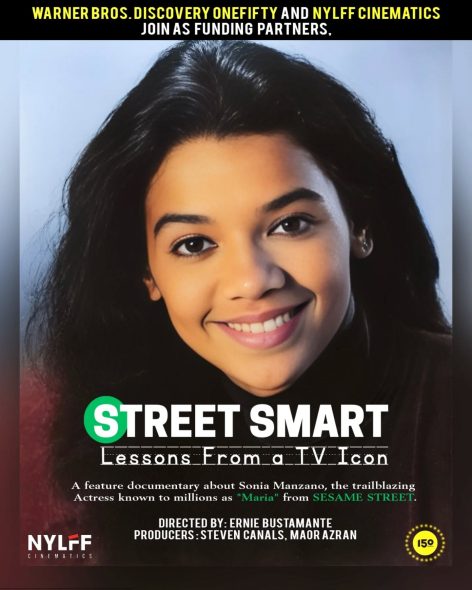
The new documentary Street Smart: Lessons from a TV Icon, emphasizes how Sonia Manzano – best known for playing Maria on Sesame Street – is a Latina icon. She was one of the first leading Latina women on television. But it is also a New York story, an artist’s story, a story about women and resilience. Like her most famous role, Sonia has a story for everyone and filmmaker Ernie Bustamente invites you in to listen. The film made its New York debut November 16 with a screening at DOC NYC, the New York Documentary Film Festival.
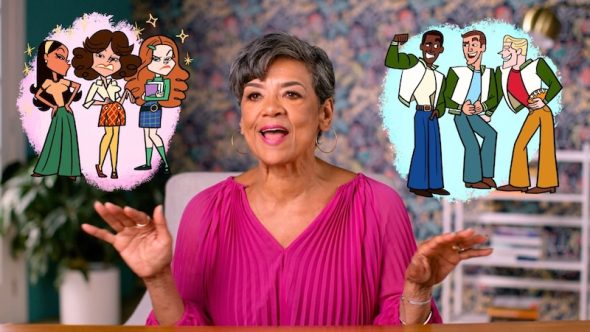
The documentary takes you through Sonia’s life as if you were flipping through a scrapbook together and she is telling you what she has to say about each page. The film seamlessly weaves photos, video footage, interview footage with Maria and other guests, animation, and live action recreations in a thoughtful, quilted way that makes it clear that for every shot, there was a decision about how best to serve the narrative in that moment.
Sonia grew up in a troubled home in the South Bronx that was full of instability and domestic violence. But she had people who cared and guided her toward choices she wouldn’t have considered, including attending a performing arts high school. She also remembered the profound effect of having a teacher take her to see West Side Story, where she saw Rita Moreno and New York streets that reflected her streets. She saw the city she knew as art and the things that were familiar to her – including fire escapes and schoolyards and factory windows – as places that could contain beauty, where important things happened.
She also learned the power of authenticity when she had to write a couple of paragraphs about herself for her drama class and she was honest about her life, sharing that home wasn’t a safe place. By sharing her experience, she showed what she could bring to space where her life may be different than those in her class but was certainly the reality for many others. For certain moments, such as this one, actors recreate scenes in her life, but these scenes are well crafted and used sparingly, often with Sonia’s voice included.
When people didn’t help her, she made her own way, including getting accepted to Carnegie Mellon University, where she ended up in the original cast of Godspell, a student production at the time. When it moved to off-Broadway New York, she went with it.
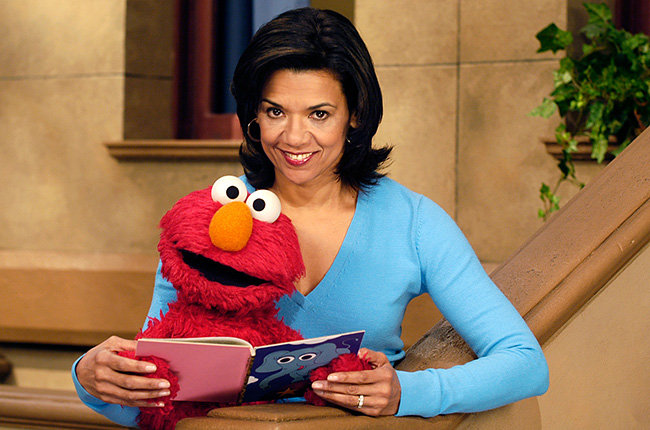
And we all know where this is headed. Maria. Latino rights groups that recognized how important Sesame Street was and how important representation on Sesame Street was, pushed the show to add Latino characters and Sonia was hired in 1971.
What struck me about Sonia is the way she chose to create for others what she didn’t have herself. For Latino children who wanted to see their language and culture represented, she gave them that. For the children who didn’t feel that home was a safe place, she gave them a sense of security and stability. When she felt that the scenes focusing on Latino life were not “zany enough” to compete with, as she described it, monsters eating tables, she became a writer on the show and went on to win 15 Emmys for it. She hadn’t acted on a set or written scripts before Sesame Street, but not having done something before was not a deterrent – she saw opportunities where others saw barriers.
Headliner people gave interviews about Sonia for this film, including Supreme Court Justice Sonia Sotomayor (the other Sonia from the Bronx), and Sesame Street puppeteers Carmen Osbahr (Rosita) and Ryan Dillon (Elmo). But it’s really Sonia’s voice that carries the film. She doesn’t seem like someone who spent decades talking to children. She doesn’t sugar coat things. She doesn’t talk down to anyone. She tells things as she sees them and with humor and wit and some self-deprecating reflection – and she invites a conversation. It is immensely refreshing to listen to someone who doesn’t seem to be spinning the facts or trying to sell you something.
During the Q and A after the film, Ernie Bustamante said one part that got cut was when he asked Sonia what “street smart” meant to her and she answered that she was good at seeing the writing on the wall. For me, this came through in her choice to leave Sesame Street when she felt the time was right – she saw her character less and less a part of the scripts. She had other projects to pursue. She went on to write a memoir, a novel, and children’s books. She also created Alma’s Way, an animated series about a Puerto Rican girl living with her family in the Bronx. Along with Sonia Sotomayor she helped establish a children’s museum in the Bronx, the only New York borough without one.
Ultimately the documentary is a story of someone who needed an escape and created that for herself. Then she shared that safe space with others. Somehow she helped make a street with an 8-foot tall talking bird and a monster who eats tables as real to kids as their own streets, where anyone was welcome.
Her relevance and the importance of what she and Sesame Street started out to address continue. She mentioned after the screening that in the 60’s revolutions, it was an idealistic time and there was a lot of diversity in what people were protesting against. But now there are only two groups – us versus them, and that’s harmful. She also said there is a confusion today that cruelty is strength, and that is what we need to fight against. And, of course, it came up many times that public broadcasting continues to be needed and yet has possibly never been so threatened. Public television – where a Latina women wasn’t asked to take on an accent or be a stereotype.
My family went together to the screening because I want my 8-year-old to know about badass women who shape the world. When the screening was over, my daughter said she wanted to tell Sonia something, so we followed a crowd and waited to be able to see her. My daughter, a fan of both Maria and Alma’s Way, walked up to Sonia and told her about a play she is going to be in and that because she saw how being herself made Sonia a better actress, my daughter was going to bring herself to her character, too.
Just another example of how Sonia left Sesame Street in 2015, but continues to influence children. I thought about all the time and effort and care that went into Sesame Street curriculum and lessons on everything from words that start with U to how to cooperate. And in reality the most important thing Maria and the show gave us was authenticity and the space – and the encouragement – to be who we really are.
Street Smart: Lessons from a TV Icon is making the rounds of film festivals. The documentary can be streamed online as part of DOC NYC through November 30.
Click here if you just met a girl named Maria on the ToughPigs Discord!
by Drake Lucas