
All quotes pulled from the book Fraggle Rock: The Ultimate Visual History by Noel Murray and Jody Revenson (2021)
It is an oft-quoted anecdote that when Jim Henson was planning the show eventually to become Fraggle Rock, his ideas came from his desire to “end war and bring peace to the world.” Jim, and the whole team who developed the show, were socially conscious people and aware that they had a platform from which they could make a real difference in the world. Even if they couldn’t physically stop people and political entities from fighting, they could, according to Duncan Kenworthy, producer for the show, “teach children the value of relative viewpoints. That people have different perspectives depending on circumstances, and one is often as valid as the other.” The talented group of people that Jim Henson assembled created ninety-six episodes of television with stories and characters that teach cooperation, understanding, recognition of interdependence, and a whole host of other lessons for living peacefully on a planet with all manner of creatures.
The show was a success. It won awards. It’s still beloved and relevant to this day. It even got a reboot in 2022 which teaches many of the same types of lessons. But the reboot, Fraggle Rock: Back to the Rock, while being of the same quality, with similar thoughtful production, writing and performing, has faced a lot of criticism. People claim it’s “woke,” that it sows discord instead of bringing people together and that it’s a mouthpiece for the political left. And all this not just from people who make their living pointing at things to get mad at. Fans of the original show, who theoretically learned the lessons from the Fraggle five the first go around, have negative things to say about the recent show’s agenda. So what’s different?
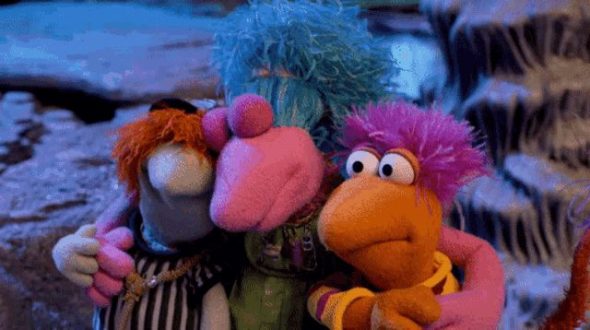
Obviously many things are different after forty years. The World’s Oldest Fraggle isn’t a spring gorg-chicken anymore, for one. For two, there are new writers, new puppets, and new challenges for Fraggles to face. But the show also brought back original writers, original performers and most importantly, the original vision. So the criticisms can’t be about how it’s nothing like Jim Henson’s original show. Something else is going on here that has nothing to do with non-binary characters, echo chambers or teaching Fraggles capitalism. And that something else, the thing that is so off-putting to the critics, causing them to make these derogatory comments, is the context.
In the 1980s, if someone said “war” it would conjure images of nuclear weapons, which had only been developed 40 years before that. It brought to mind Korea and Vietnam, conflicts that the world still felt all too keenly. War was an atrocity. It was an atrocity that occurred between sovereign states and, with very few exceptions, not within the United States. And so the understanding of war for many people watching Fraggle Rock in its original run had a context focused outward. Because in many Americans’ minds, especially those with the privilege to pay for HBO in the 80s, America had solved all of its internal, interpersonal problems. Racism ended in the 60s with the Civil Rights movement. Homelessness could be overcome if people pulled themselves up by their bootstraps and got a job. LGBTQ+ individuals were ignored unless they were being disparaged.
This despite Jim Henson specifically having witnessed these sufferings growing up in Mississippi in the 30s and 40s and almost certainly considering them when putting this project together. His son, Brian Henson said of his dad, “[There was] some pretty awful stuff going on. [His philosophy was] less about tribal loyalty and more about wanting to bring people together. I think a lot of that was probably from growing up in a very intolerant society.” When people argue on the Internet about what Jim Henson and his creations stood for, they always seem to remember the “bringing people together” part but never the part where this doesn’t work when the intolerant side, the side in power right now in the US government, not only refuses to engage in the process of reconciliation but actively seeks to harm anyone different from themselves.
Unfortunately, these intolerant attitudes were supported in the coverage they received from news outlets. Very few of the news stories during the one hour of news per day or in the physical newspaper were concerned with what people who were not the white, middle class hegemony were doing. So it was more difficult to know what else might be going on in the world or even down the street, good or bad, if it wasn’t valued by that group. Unless people stuck their heads out of their Fraggle holes to listen to people who were different from them, they likely didn’t consider that war, and all of its many insidious ingredients, were right in their own homes.
Let’s fast forward to today. Our current context is one in which we are faced with the proof that we did not solve racism. We did not learn to listen. We did not develop empathy for those who look and believe differently from us. But we did grow up. We do understand that war isn’t just about bombs and machine guns and propaganda from one country against another. We do understand that war isn’t contained solely within history books. War is in how we police each other. Whether that be in the people we accept into our friend group, in the opinions we accept on our social media posts, or in the way we treat the service workers at our local coffee shop.
“That’s not war,” you might say. But isn’t it? War isn’t just one big aggression. It’s also made up of thousands of tiny actions like excluding others. Shutting others out means devaluing not just their words, but them as humans. And once they’re no longer humans, they can be denied respect, their rights, and even their lives.
This is how human rights abuses are perpetuated by the United States government (both those happening now and those that have been ongoing since even before the country’s founding). When people continue to support the federal government’s aim to be exclusionary, it allows for the formation and funding of the Department of Homeland Security in ways that lead to ICE targeting then abducting our neighbors off the street. And despite how horrid this is, many of the American people believe it’s the right thing to do because the “correct” news outlets claim those people are in the country illegally and committing violent crime. This support gives ICE more latitude for detaining our neighbors in facilities and conditions detrimental to their physical and mental health, then sending them to countries they never came from. When people disagree with these practices, standing up for the rights of their neighbors and trying to protect them, they are shot in the street by CBP. News outlets call those deaths “collateral damage” for making a better, safer country. And all those people protesting, who don’t agree with these practices, who are being detained and targeted, who don’t swallow the propaganda and allow people to be disappeared, are causing their own suffering.
Does this sound wrong? It should, for many reasons. One of those reasons being because the original Fraggle Rock warned us against all of this. “A Tune for Two” is an episode about excluding Cotterpin from a fun bit of Fraggle life because she’s a different species. It’s a metaphor for racism and the institutional ways people from outside groups are excluded and demeaned. It takes active challenging of these long-established oppressions to undo them. Then there’s “Believe It or Not,” in which a creature can change into whatever people believe it is. Ma Gorg believes it to be a monster. She spreads this unfounded belief until others believe it as well. And therefore the creature becomes that monster. It’s only with great effort that the Fraggles are able to convince the Gorgs otherwise. Similarly in the US, many groups are being vilified by hate mongers just for existing, like Black, transgender and Hispanic peoples. “Manny’s Land of Carpets” teaches the power of propaganda. When the voices in the radio tell the Fraggles to support certain sides, they’re willing to fight for the one they think is right, having no further evidence than what they heard. There are more news outlets than can be named doing exactly this in the country right now.
If you’re one of those people who get your “news” from the sources that support abominable acts and you’re also a reader of ToughPigs, this is your chance to use all those lessons that Fraggle Rock taught you. This is your chance to see the light in everyone and everything around you. This is your chance to not only acknowledge that war is in our streets, but it’s been there the whole time, and it’s time to do something about it. It’s not something from a history book. It’s not happening somewhere else. It’s called military action, and it looks like US forces invading sovereign nations despite them having a right to self governance all because of oil. It’s called racism, and it looks like Black reporters being arrested for exercising their first amendment rights to freedom of the press. It’s called censorship, and it looks like book bannings in schools and libraries. It’s called transphobia, and it looks like banning people from using the bathroom. All of these, and many more, are examples of our local and national governments taking away the basic rights guaranteed by the documents those governments are founded on. Does that look like peace to you?
ToughPigs does not support any of these actions. We do not support the actions or even existence of ICE/CBP/DHS. We do not support the unhealthy recommendations of the Department of Health or any other organization that promotes harm. We want peace. Peace takes work. Peace takes self-examination. Peace takes hearing others when they tell you you’re wrong and letting those words lead you to a better place. Peace is finding yourself in others and promising to do for them as you want done for yourself. Like a Fraggle working with a Doozer, peace is knowing that when everyone works together, everyone does better. Peace takes a willingness to learn. And one wonderful place to learn about peace is on Fraggle Rock. Old or new, the episodes show us how to grow a dialogue, an understanding, a future together.
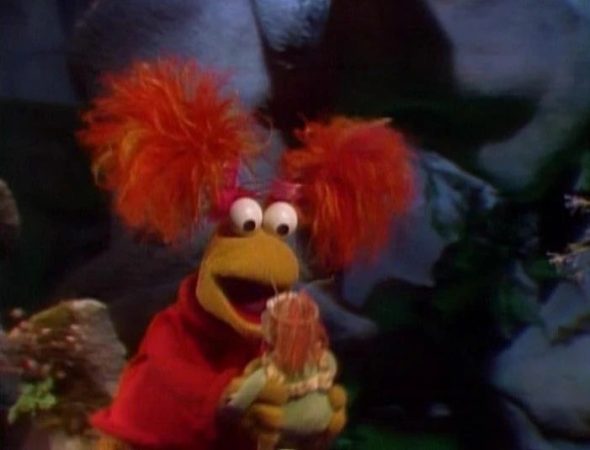
The reason why Back to the Rock receives the criticism that it does is because it reckons with all of the forms of war and their root causes. And it does so in ways that adults recognize. The lessons it teaches are general enough that they can be learned even in a fantasy world like Fraggle Rock but specific enough that even dunderheaded Gorgs can learn and grow. Unfortunately, when the same types of people who think it’s permissible to terrorize their neighbors recognize it, instead of heeding the lessons, they do everything in their power to stamp out any views that don’t align with the story they’ve accepted. They refuse to acknowledge that harm has been and continues to be done in this country and in their own towns. And, in doing so, cause more harm. They cling to the story that the old Fraggle Rock wasn’t so divisive, wasn’t controlled by a liberal agenda. It only delivered messages of harmony about universal values like generosity and friendship. But I beg everyone to look again, this time without nostalgia in your eyes. If you need further examples, “Wembley’s Wonderful Whoopie Water” is about resource extraction. “Wembley and the Mean Genie” is a masterclass in how fascists use social engineering propaganda. There’s a whole episode titled “Fraggle Wars.”
These episodes were relevant then just as they are relevant today because not enough people have learned their lessons. We needed the Fraggle Rock reboot because not enough people are advocating for all the changes that we need. The people who have learned are out there. They’re on the streets in Minneapolis right now. They’re standing outside detention facilities bringing attention to the mistreatment there. They’re calling and emailing their governmental representatives and demanding reform. The country we’re living in is not okay, and it’s only going to get better if we (and here’s where I have to diverge from Fraggle Rock for a second) don’t save our worries for another day. It won’t be as easy as dancing, but you can and should bring friends.
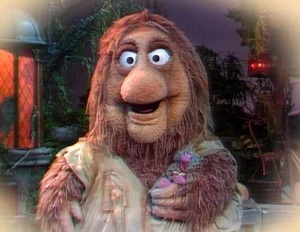
As you might know from having watched Fraggle episodes like “Beyond the Pond,” “The Day the Music Died,” “Let the Water Run,” “The River of Life” and many, many others, we are all interconnected. Since how we act has lasting impacts on us and those around us, here are some ways we can support people undergoing human rights abuses, and how we can prepare for it when we see it in our local areas.
- Become a Constitutional/legal observer
- Donate to the ACLU or another organization doing work in support of human rights
- Contact your members of Congress
- Be actively anti-racist
- How to protest
- provide whistles
- How to organize
- Support organizations fighting the control of information, like your public library or independent journalists
- Attend local government meetings and speak during the public comment period
Click here to come in peace to the ToughPigs Discord!
by Katilyn Miller